Avoid Uncomfortable Sleeping Positions To Reduce Back Pain
Many people associate back pain with carrying heavy loads or straining the back and gluteal muscles with hard manual work. Some people think of back pain as a result of a past accident or even a violent incident. What people don't realize is that uncomfortable sleeping positions can be the cause of lower back pain.
When chiropractors were asked about back pain reasons, they illustrated the bad sleeping habits to be the cause of this health issue. Research also revealed that a poor sleeping position can lead to all sorts of pain in the back and the rest of the body.
Some facts about backache:
- 80% of Americans experience back pain at some point in their life.
- Americans spend at least $50 billion annually on back pain treatment.
- In the United States, 3 million years of productive life is lost every year due to back pain.
What Are the Common Signs & Symptoms of Back Pain?
People who experienced back pain describe it in several ways. Some signs and symptoms include:
- Muscle aches
- Stabbing back pain
- Pain that radiates from the hips and down each leg
- Body stiffness
- Reduced Flexibility
- The lower range of motion
What Are the Causes of Lower Back Pain?
Based on the data collected by chiropractors - conditions commonly linked to back pain are:
- Poor Postures
- Ruptured or Bulging discs
- Muscles or Ligaments Strain
- Ligaments Tear
- Osteoporosis
- Osteoarthritis
- Fibromyalgia
- Other Bone Problems
Sleeping Posture and Its Effect on The Spine
When people seek chiropractic care for back pain, they learn how important it is to have a good posture while sleeping. How you lie on the bed may indicate the difference between a restful night's sleep and aching back the next morning. Here are some sleeping habits or positions and how they contribute to backache or relieve back pain:
- The Worst Sleep Position - On Your Stomach: Sleeping on your stomach is not a good way to relax. First, you have to twist your neck to the right or left, and you often change your position overnight. This sleeping position is not suitable for your spine, especially the upper cervical spine, which connects the head to the neck. Breathing is not optimal because bodyweight presses on the stomach in a downward manner.
- The Ideal Sleep Position - On Your Back: According to research, the best position to avoid back pain is to lie flat on your back. Even so, many people find it hard to enjoy a sound sleep. This makes normal breathing unimpeded, whether breathing through the nose or the mouth. Since the back is flat on the bed, there is no need to twist or bend the spine; the lower back and hips are also stable.
Some tips: - For optimal spine alignment, place one pillow or rolled-up towel under your head or neck and another under your knees.
- The pillow will also reduce the pressure on the lower back once your spine and knees are straight on the bed.
- The Good Sleep Position - On Your Side: Lying on your right side is also a good position if the pillow is thick enough to support one side of the face and neck. A pillow that is too thick or too thin can cause neck pain. It is also advisable to place a thin pillow between your legs to serve as a cushion instead of spanning your legs. Crossing your legs will put pressure on your lower back and legs.
The Takeaway
Knowing these sleeping postures will help you choose the correct position and train your body to stay in that position during sleep. It prevents spinal contortions that can cause back pain and other discomforts.
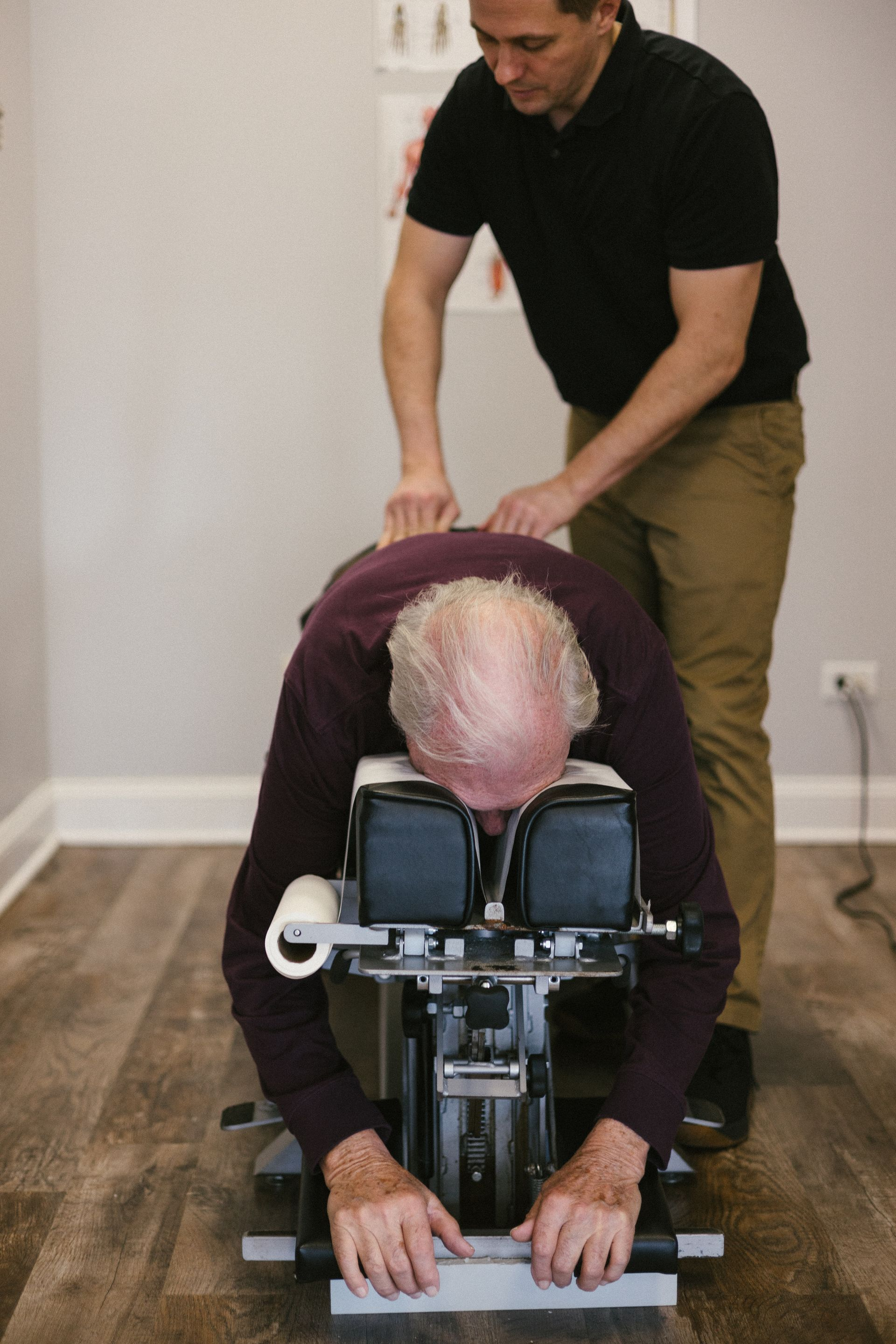
Visiting a chiropractor can help you avoid uncomfortable sleeping positions to reduce back pain.
If you don’t have an amazing chiropractor
Contact us today!
Family Chiropractic Plus is dedicated to your overall health and well-being, which is why we offer regular
chiropractic adjustments in order to restore your body’s natural state of
optimal health, while also providing it with the support it needs to heal from any injury, big or small.